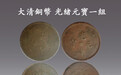

世纪收藏网:不假雕琢-大清铜币光绪元宝一组



独家抢先看
铜元,中国清末民初以来所铸各种新式铜币的通称,俗称铜板。是我国近代货币体系的重要组成部分。我国铜元诞生于清朝光绪二十六年(1900年)。铜元与历代的方孔铜钱不同。中间无孔,系仿照香港铜辅币铸造而成的。它的诞生,标志著我国金属货币铸造工艺从传统的手工翻砂铸造进入了先进的机器化生产的新阶段。
Copper, China's late Qing Dynasty since the beginning of the people cast a variety of new copper, commonly known as copper. is an important part of China's modern monetary system. Our country copper was born in Qing Dynasty 26 years (1900). The copper is different from the square hole coins of dynasties. There is no hole in the middle, the system is modeled after Hong Kong copper coins. It is the birth of China's metal currency casting process from the traditional manual foundry casting into a new stage of advanced machine production.
光绪二十六年,李鸿章奏准在广东开铸铜元。清铜元次要分爲两大类,在先的一类币面书“光绪元宝”,在后的一类币面书“大清铜币”。除广东外,先后开铸的厂局还有福建、湖北、四川、清江等20余局。四川是铜元铸造大省,光绪二十九年(1903)至民国六年(1917)十二月,成都和重庆两个官方厂所铸铜元数量位居全国之冠。
In the 26th year of Guangxu reign, Li hongzhang made copper coins in Guangdong. The Qing dynasty copper coins were divided into two major categories, the first type of coin face book " Guangxu yuanbao" and the second type of coin face book " Qing dynasty copper coin". In addition to Guangdong, there are more than 20 bureaus in Fujian, Hubei, Sichuan and Qingjiang that have been successively opened. Sichuan is a large province of copper coin casting. from 1903 to 1917, Chengdu and Chongqing were the two official factories that produced the largest number of copper coins in the country.
大清铜币,学名清代机制铜圆,钱面中央有“大清铜币”四个汉字,内嵌一小字代表地名,上端是满文“大清铜币”字样,两侧为年份。边缘中间分别“度支部”三汉字,下端为“当制钱十文”。此钱币为大清铜币度支部造当制钱十文,钱背中央为蟠龙,上端是“光绪(或宣统)年造”,下端英文“Tai-Ching Ti-Kuo Coper Coin”字样(大清帝国铜币)。
Qing copper coin, the scientific name of Qing dynasty mechanism copper coin, has four Chinese characters " Qing copper coin" in the center of the coin surface. a small character is embedded to represent the place name. at the top is the Manchu word " Qing copper coin" with the year on both sides. In the middle of the edge are the three Chinese characters " degree branch" and at the lower end are the ten characters " when making money". This coin is made by the Qing copper coin office as ten coins, with panlong in the center of the coin back, Guangxu ( or Xuantong ) year at the upper end and tai - ching ti - kuo copper coin at the lower end ( Qing empire copper coin ).
清朝历代皇帝均发行有年号钱,从乾隆年间开始,清政府在西藏开始发行银币,咸丰年间曾发行户部官票和大清宝钞,清朝后期,以制钱为主的中国传统铸币逐渐被机制币所取代,而银两也被银元所取代。“ 大清铜币”,反面是一条栩栩如生的神龙。在中国,由于中华民族是龙的传人,在官方传说,“大清铜币”反面的龙,能添加一团体的气运,使其时辰在龙气的维护下,趋吉避凶。所以这枚钱币不断深受珍藏家的喜欢 “大清铜币”珍藏价钱难以估量大清铜币版式单一,尤以当十者爲最。多位清帝在位时发行过铜币来作爲流通货币,铜币的运用具有重要的理想意义和历史意义,使买卖逐步便当起来。
Emperors of all dynasties in the Qing dynasty issued year-old coins. Starting from the Qianlong period, the Qing government began to issue silver coins in Tibet. During Xianfeng's year, he issued official government tickets and Qing treasure notes. In the late Qing dynasty, the traditional Chinese coins, mainly making money, were gradually replaced by machine-made coins, while silver coins were also replaced by silver coins. " Qing copper coin" is a lifelike dragon on the opposite side. In China, since the Chinese nation is a descendant of the dragon, according to official legend, the dragon on the opposite side of the " Qing copper coin" can add a group of destiny so that it can keep its luck under the protection of the dragon spirit. Therefore, this coin has been deeply loved by collectors. the collection price of " Qing copper coin" is difficult to estimate. the format of Qing copper coin is single, especially when it is 10. Several Qing emperors issued copper coins as circulating currencies during their reign. the use of copper coins has important ideal and historical significance, making the sale and purchase easier step by step.
光绪元宝当十铜圆共有十九个省局铸造。除中央户部铸造者外,地方各省所铸铜圆,皆在其正面上缘镌写省名。计有:1、中央户部;2、北洋;3、吉林;4、奉天;5、清江;6、浙江;7、江南;8、广东;9、山东;10、福建;11、湖南;12、湖北;13、四川;14、江西;15、河南;16、江苏;17、安徽;18、广西;19、新疆。其中,广西“光绪元宝”当十铜圆,现今存世仅数枚而已,自然无法收集。“新疆省造光绪元宝”当十铜圆,存世少。所以,收藏清代当十铜圆,一般以集齐十七省局为准。广西“光绪元宝”当十铜圆,则根本不去奢望。
There are 19 provincial bureaus casting Guangxu yuanbao dang ten copper circles. Except for the central household founders, all the copper circles cast by the local provinces have inscribed their provincial names on the upper edge of their front faces. There are: 1. the central household department; 2. Beiyang; 3. Jilin; 4. Mukden; 5. Qingjiang river; 6. Zhejiang; 7. Jiangnan; 8. Guangdong; 9. Shandong; Fujian; 11. Hunan; 12. Hubei; 13. Sichuan; 14. Jiangxi; 15. Henan; 16. Jiangsu; 17. Anhui; 18. Guangxi; 19. Xinjiang. Among them, Guangxi's " Guangxu yuanbao" is a ten-copper circle, and only a few pieces exist in the world today. naturally, it cannot be collected. " Guangxu yuanbao made in Xinjiang province" becomes a ten-copper circle with very little existence and is extremely difficult to obtain. Therefore, the collection of the Qing dynasty's ten bronze coins is generally subject to the collection of the 17 provincial bureaus. Guangxi's " Guangxu yuanbao" became a ten-copper circle, but it did not entertain wild hopes at all.
光绪元宝是中国近代机制币中的十大名誉品之一,其版面设计优雅别致,雕刻精良,被誉为钱币精品,具有无法估量的学术与历史价值。光绪元宝铜币被称为是“收藏品的生命”。
Guangxu yuanbao is one of the ten famous coins in modern China. its layout is elegant and unique, and it is well carved. it is praised as a fine coin product and has inestimable academic and historical value. Guangxu yuanbao copper coin is called " life of collection".
目前就有一组大清铜币和光绪元宝展现在国内知名艺术网-世纪收藏网。先看此枚大清铜币,正面书“大清铜币”四字,其钱文书写大气苍劲,背面云龙纹,彰显华夏帝国图腾,钱币表面稍有磨损,包浆醇厚,珠圈外英文对照,有明显的中西文化结合。我们再来看此枚光绪元宝,钱币正面珠圈内铸有铭文“光绪元宝”四字,珠圈外环上为满文及户部,左右两侧各饰有两朵小花,下铸“当十”,字体端庄整洁,优雅大方。钱币背面中央铸蟠龙图,外缘上方英文字样。虽然钱币正面依旧是满汉文化的融合,但是背面却标示着西方文明的介入,带着鲜明而浓厚的历史意义。钱币虽小,该钱币表面历史留下的痕迹清晰可见。
At present, there is a group of Qing copper coins and Guangxu yuanbao displayed in the well-known domestic art network - century collection network. First look at this Qing copper coin. the front book is " Qing copper coin". its Qian Wen is full of vigorous atmosphere and cloud and dragon lines on the back. it shows the totem of the Chinese empire. the surface of the coin is slightly worn out, the wrapping pulp is mellow, the English contrast outside the bead circle is obvious, and there is an obvious combination of Chinese and western cultures. Let's look at this Guangxu yuanbao again. the inscription " Guangxu yuanbao" is cast in the bead ring on the front of the coin. the outer ring of the bead ring is full of characters and household parts. the left and right sides are decorated with two small flowers respectively. the lower part is cast " dang 10". the font is dignified, neat and elegant. A panlong figure was cast in the center of the back of the coin, with English characters above the outer edge. Although the obverse side of the coin is still the fusion of Manchu and Chinese cultures, the reverse side is marked by the intervention of western civilization and has distinct and strong historical significance. Although coins were small, they could also show a glimpse of the social culture at that time. Traces left by the surface history of the coin are clearly visible.

“特别声明:以上作品内容(包括在内的视频、图片或音频)为凤凰网旗下自媒体平台“大风号”用户上传并发布,本平台仅提供信息存储空间服务。
Notice: The content above (including the videos, pictures and audios if any) is uploaded and posted by the user of Dafeng Hao, which is a social media platform and merely provides information storage space services.”